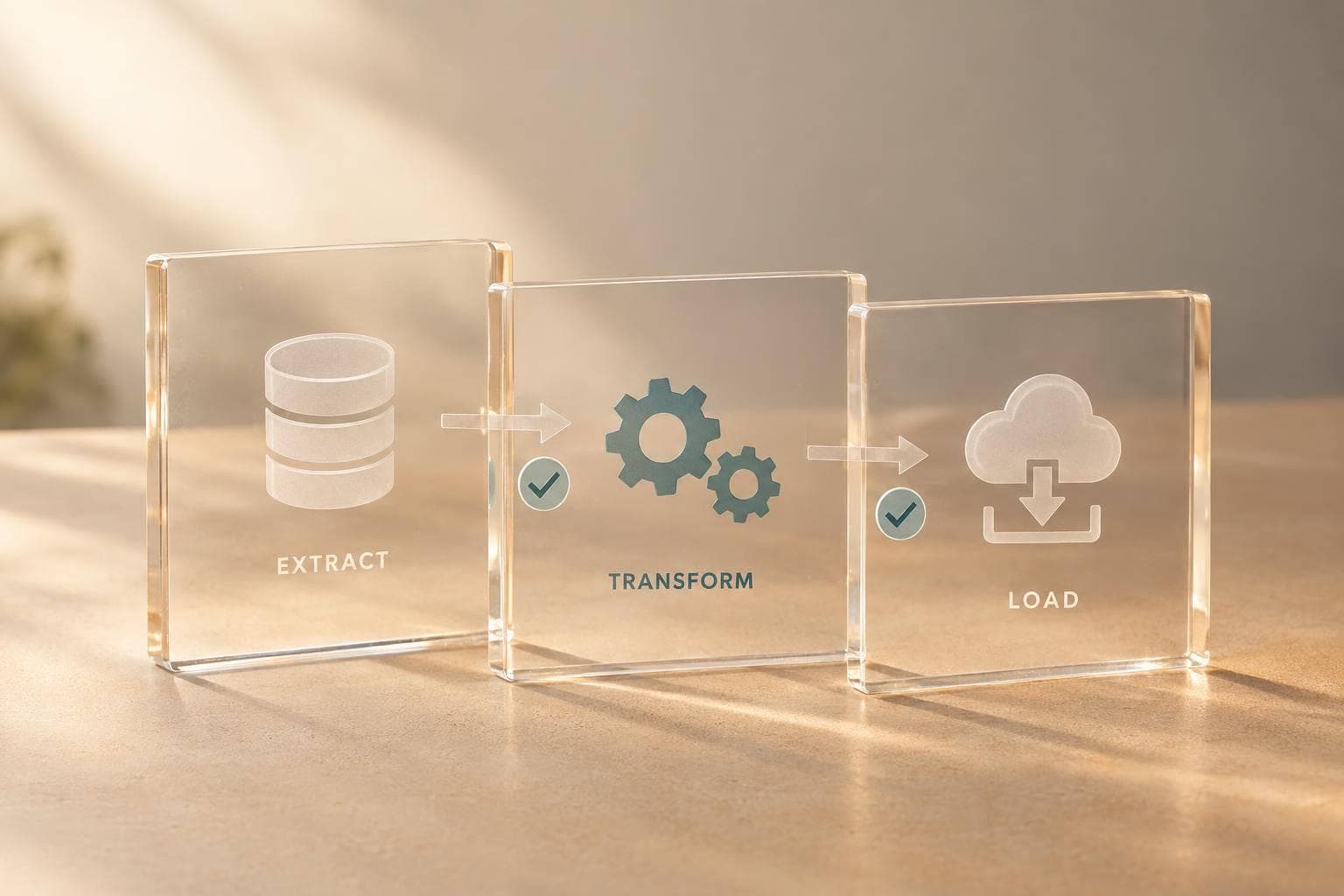
ETL Process
ETL Process Workflow Builder
Plan data pipelines with more clarity
A strong ETL Process starts with knowing exactly how data will be extracted, cleaned, transformed, and delivered to its destination. This tool makes that easier by turning a few simple inputs into a practical workflow outline you can scan in minutes. Whether your source is a database, API, CSV file, or SaaS platform, the generated plan highlights the steps that matter most for your setup.
Tailored guidance for real-world data movement
Instead of giving you a generic diagram, the tool adjusts recommendations based on volume, destination, and transformation complexity. That means API workflows can include pagination and rate-limit handling, while larger jobs can surface partitioning, batching, and recovery strategies. If your team is moving data into a warehouse, lake, or operational database, the output reflects the loading patterns and validation checks that fit that target.
A practical way to explain and improve your ETL Process
It’s useful for both planning and communication. You can use it to document a new pipeline, explain a current one to stakeholders, or identify weak points in an existing ETL Process. The result is a cleaner view of extraction logic, transformation tasks, data quality checkpoints, scheduling decisions, and common bottlenecks.
FAQs
Who is this ETL Process tool for?
It’s useful for analysts, data engineers, operations teams, and even non-technical stakeholders who need a clearer picture of how data moves from one system to another. If you’re planning a new pipeline, documenting an existing one, or trying to explain ETL to a teammate, this tool gives you a structured starting point without making the process feel overly technical.
How does the workflow change based on my inputs?
The output adapts to the practical realities of your setup. For example, API sources bring in concerns like pagination, authentication, retries, and rate limits, while CSV imports may focus more on file formatting, header validation, and schema consistency. If you select large data volume, the workflow will highlight batching, partitioning, parallel processing, checkpointing, and recovery planning. More complex transformations also add stronger emphasis on business rules, mapping logic, validation layers, and performance tuning.
Can this replace ETL tools or engineering work?
No, this is best used as a planning and explanation layer rather than a replacement for your ETL platform or development process. It helps you define the workflow, spot risks early, and document key decisions before implementation. That makes it especially valuable during discovery, architecture discussions, handoffs, and process reviews.