SQL Interview Questions
SQL Interview Prep That Feels Practical
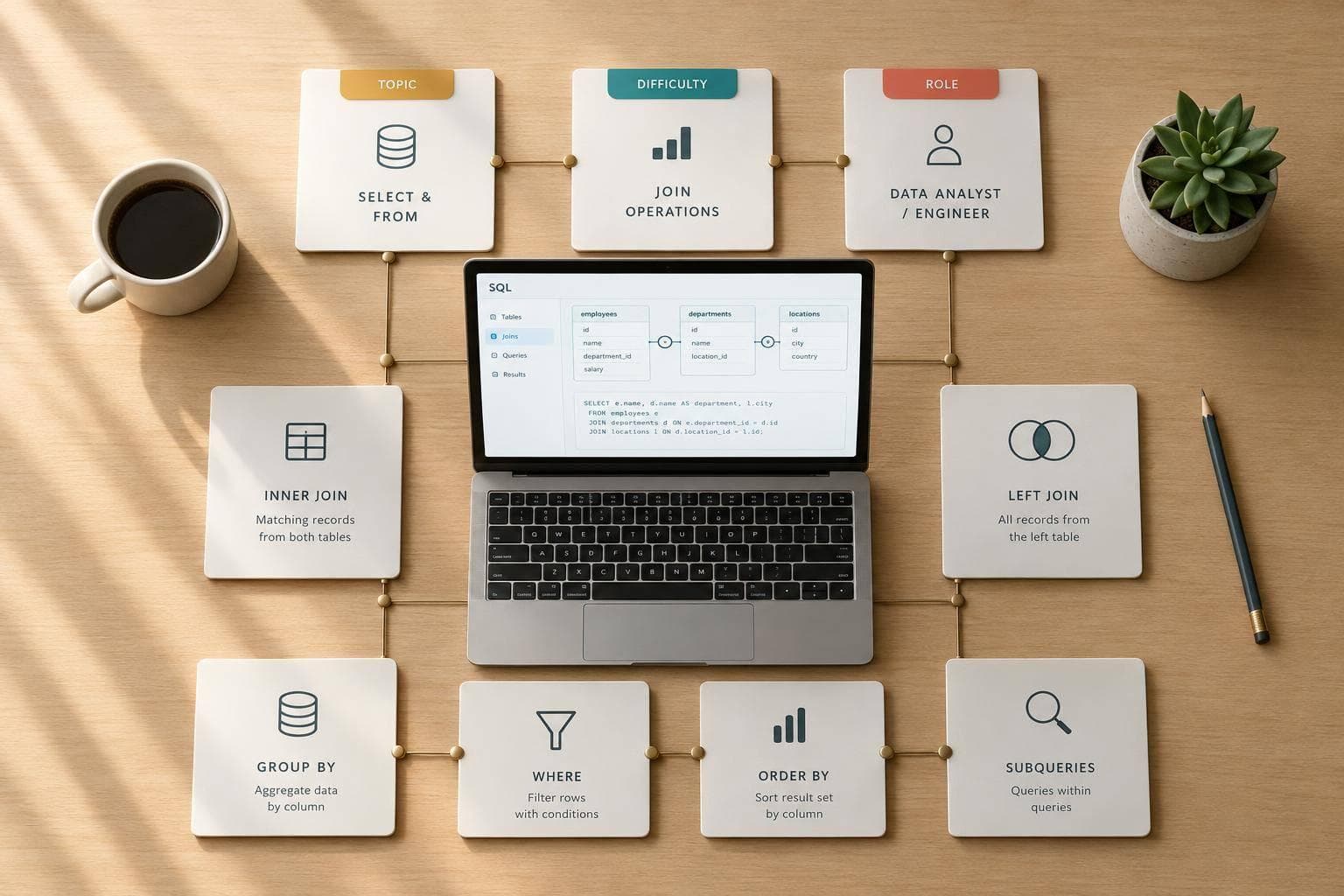
Preparing for a database interview is easier when you can study with structure instead of jumping between random blog posts and outdated examples. This tool is built to help you work through SQL interview questions in a way that matches how real technical interviews often unfold. You can filter by difficulty, topic, and role, which makes it easier to focus on the areas that matter most for your next interview.
Study by Topic and Skill Level
Whether you need to review joins, aggregations, subqueries, window functions, or query optimization, the question bank is organized so you can move from fundamentals to more advanced problem-solving. That makes it useful for beginners brushing up on the basics as well as experienced candidates preparing for deeper SQL interview rounds.
Learn the Reasoning Behind the Answer
Each prompt includes concise sample responses, clear explanations, and optional practice variations. Instead of just checking whether an answer is right, you can understand why it works, when to use it, and how to explain it confidently. If you're looking for a focused way to practice SQL interview questions and sharpen your query thinking, this tool gives you a cleaner, smarter place to prepare.
FAQs
What kinds of SQL interview questions does this tool include?
The tool covers a practical mix of SQL interview topics, including joins, aggregations, subqueries, CTEs, window functions, indexing, constraints, transactions, query optimization, and data cleaning. It includes both theory-based questions and hands-on query prompts, which mirrors how many real interviews are structured. That balance matters because interviewers often want to see both conceptual understanding and the ability to write or reason through SQL under pressure.
How should I use this tool to prepare for an interview?
Start by filtering for the role you want, such as Data Analyst or Backend Developer, then choose a difficulty level that matches where you are today. Try answering each question on your own before revealing the sample answer. After that, read the explanation to understand what the interviewer is really testing, and use the practice variation to see whether you can apply the same idea in a slightly different scenario. That process is much more effective than passively reading answers.
Are the sample answers meant to be memorized word for word?
No. The sample answers are better used as strong reference responses, not scripts. In a real interview, the best answers sound natural, show your reasoning clearly, and fit the exact question being asked. Use the provided responses to learn the important points, the right terminology, and the structure of a solid answer, then practice explaining the concept in your own words.