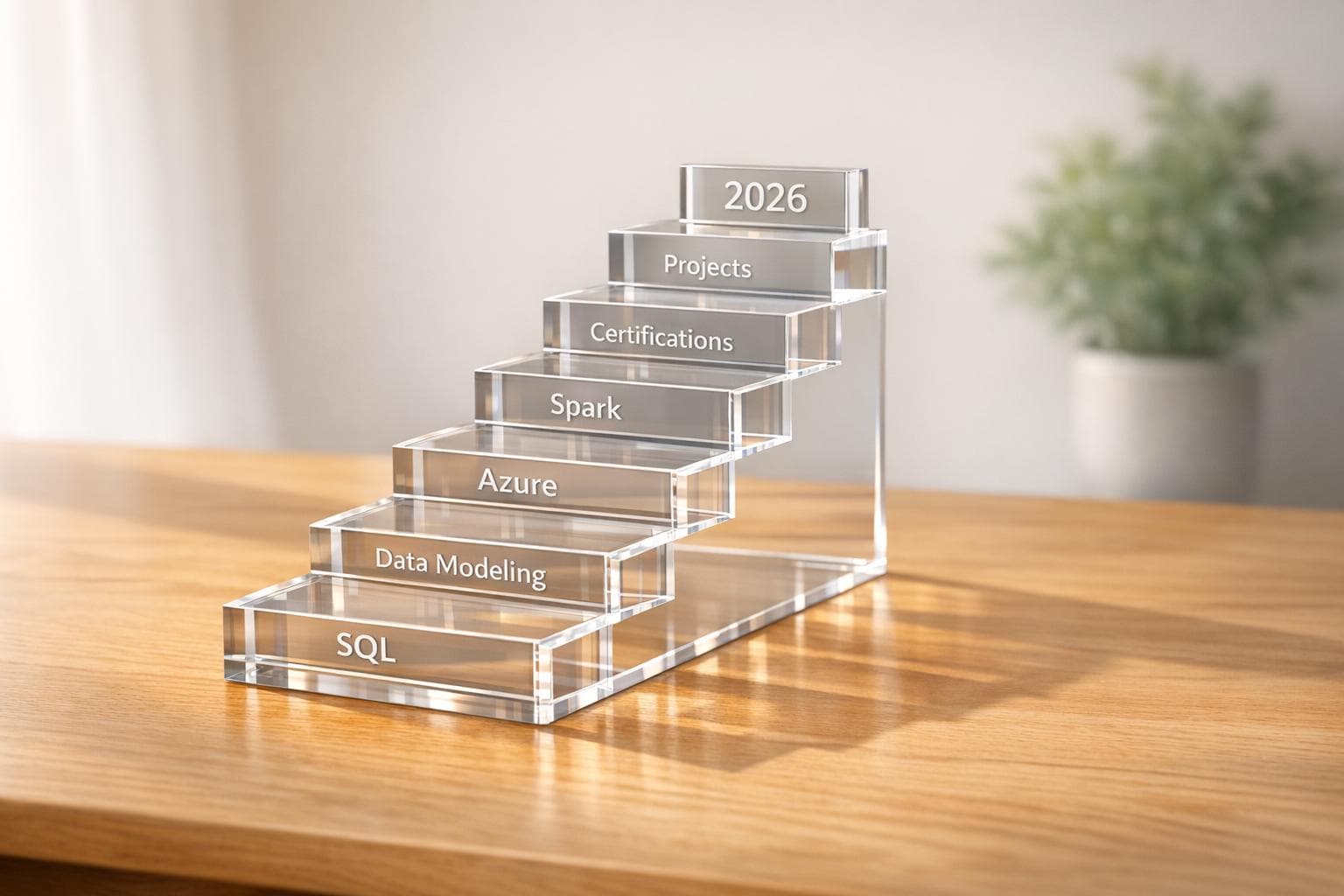
Complete Data Engineering Roadmap: SQL, Spark, Azure 2026
As the demand for skilled data engineers continues to soar, professionals and aspiring tech specialists are searching for the most effective ways to pivot into this fast-growing field. The key lies in mastering a focused roadmap that covers essential tools, platforms, and concepts while enabling practical, hands-on application.
This article presents an expertly crafted six-month data engineering roadmap for 2026, emphasizing Azure as the top cloud platform. Whether you're a fresher entering the field, a mid-level professional transitioning into data engineering, or a senior engineer expanding your expertise, this structured guide will help you acquire the skills needed to succeed in this competitive domain.
Why a Clear Data Engineering Roadmap Is Crucial
The complex, rapidly evolving landscape of data engineering can be overwhelming for newcomers and experienced professionals alike. With so many tools, frameworks, and platforms to learn, it’s easy to feel lost. A carefully planned roadmap not only organizes your learning journey but also ensures you focus on in-demand skills that deliver clear career ROI.
In this roadmap, we’ll break down the learning process into actionable steps across six months, covering foundational technical skills, advanced tools, and certifications. The focus is on practical, job-ready expertise, along with interview preparation to help you secure your dream role.
sbb-itb-61a6e59
Month 1: Building a Strong Foundation (SQL and Python)
Key Skills to Master
- SQL: A core requirement for data engineering, SQL is essential for querying, managing, and manipulating data stored in relational databases. Interview questions often assess advanced SQL knowledge, so move beyond basic proficiency.
- Python: While you don’t need to become a full-fledged software developer, understanding Python for data engineering is critical. Focus on:
- Basic programming concepts
- Object-oriented programming (OOP)
- Data manipulation with libraries like Pandas (optional)
Learning Approach
- Prioritize mastering SQL for real-world application, including advanced query writing and hands-on practice with Spark SQL or warehouse-specific SQL tools.
- For Python, concentrate on scenarios relevant to data engineering, skipping libraries like NumPy unless needed.
- Explore free and paid resources, but avoid jumping between too many courses. Stick to one or two focused materials.
Month 2: Mastering Spark and Data Processing
Why Spark?
Apache Spark is the backbone of modern data engineering. As a distributed data processing platform, it has replaced older technologies like MapReduce and dominates batch and streaming data pipelines.
Key Focus Areas
- Understand Spark’s role as the heart of data processing engines.
- Learn Databricks as a leading Spark-based platform, used for processing, transforming, and managing data end-to-end.
- Explore optional tools like Kafka for real-time data streaming if you aim to work on streaming projects.
Learning Plan
- Spend a significant portion of the second month understanding Spark concepts like Resilient Distributed Datasets (RDDs), Spark SQL, and PySpark.
- Familiarize yourself with Databricks for comprehensive project workflows.
Month 3: Cloud Fundamentals and Azure Data Factory
Choosing the Right Cloud Platform
Cloud knowledge is non-negotiable for data engineers. Among the major players - Azure, AWS, and Google Cloud Platform (GCP) - Azure stands out for its versatility, ease of use, and comprehensive service offerings.
Core Learning Areas
- Azure Fundamentals: Learn the basics of Azure, focusing on storage, access controls, and infrastructure.
- Azure Data Factory (ADF): This is a critical tool for orchestrating data workflows, managing pipelines, and handling ETL (Extract, Transform, Load) processes.
- Fabric: Microsoft’s Fabric platform is a game-changer, consolidating Spark, data ingestion, transformation, warehousing, reporting, and CI/CD under one roof. While still maturing, it’s worth exploring after mastering ADF.
Tips for Success
- Prioritize ADF as it’s widely used in enterprise settings. Once you’ve grasped it, consider learning Fabric as an extension of your skillset.
Month 4: Data Warehousing and System Design Basics
Data Warehousing Concepts
Data warehousing is foundational for organizing and querying vast amounts of structured and semi-structured data. Key topics to focus on include:
- Schema designs: Star schema vs. Snowflake schema
- Fact and dimension tables
- Type 1 and Type 2 slowly changing dimensions
- Normalization and denormalization
Optional: System Design
System design is crucial if you’re targeting senior roles or product-based companies (e.g., FAANG). However, if you’re just beginning your data engineering journey, you can defer this topic.
Month 5: Hands-On Projects and Real-World Applications
Why Projects Matter
Theoretical knowledge alone won’t land you a data engineering job. Practical experience through hands-on projects is essential for:
- Demonstrating expertise during interviews
- Building a robust professional portfolio
- Gaining confidence in solving real-world problems
Project Guidance
- Work on two to three realistic projects depending on the experience you plan to showcase.
- Projects should cover various aspects of data pipelines, including ingestion, transformation, storage, and reporting.
Month 6: Interview Preparation and Certifications
Certification Options
While certifications aren’t mandatory, they can give you a competitive edge by showing potential employers your commitment to mastering the craft. Recommended certifications include:
- Azure Fundamentals (AZ-900)
- Fabric Data Engineering Associate (DP-700)
Interview Strategies
- Mock Interviews: Practice with peers or mentors to refine your answers.
- Technical Q&A: Use platforms like LeetCode or HackerRank to strengthen problem-solving skills.
- Resume Preparation: Tailor your resume to highlight relevant skills, tools, and projects.
Key Takeaways
- Prioritize Azure: If you’re deciding between cloud platforms, Azure offers a user-friendly interface and an all-in-one ecosystem, making it ideal for data engineering.
- Follow a Structured Plan: Master SQL, Python, Spark, and cloud fundamentals before diving into advanced tools.
- Hands-On Learning Is Critical: Build at least two to three projects to showcase expertise and develop practical skills.
- Certifications Provide an Edge: Although not mandatory, earning Azure and Fabric certifications can help your resume stand out.
- Streamline Your Learning: Avoid wasting time on scattered resources. Follow one roadmap and stick to it for efficient learning.
- Master Core Tools: Focus on Spark, Databricks, Azure Data Factory, and data warehousing concepts to build a solid technical foundation.
- Prepare for the Job Hunt Early: Mock interviews, a polished resume, and familiarity with common interview questions will improve your chances of landing a role.
Conclusion
Becoming a data engineer in 2026 is both challenging and rewarding. With the right roadmap, you can transition into or advance within this high-demand field in just six months. Focus on building expertise in essential tools, completing hands-on projects, and preparing for interviews to achieve your career goals.
By following this structured plan, you’ll not only acquire job-ready skills but also position yourself as a competitive candidate in the rapidly evolving data engineering landscape.
Source: "[2026] Data Engineering RoadMap" - Clever Studies, YouTube, Jan 5, 2026 - https://www.youtube.com/watch?v=YKrUIB7YfAE