Analytics Engineering
49 articles tagged with "Analytics Engineering"

Data Engineer Certs and Salary: 2026 Guide
Certifications can open screens, but salary follows role scope, production ownership, and measurable impact.

Databricks Warehouse HA: 7 Design Patterns
Seven Databricks warehouse HA patterns to meet RTO/RPO: scaling, AZ resilience, failover, retries, stateless compute, standbys, isolation.

Fraud Detection with Streaming Data: Use Cases
Use streaming events plus historical context to detect fraud across banking, e‑commerce, insurance, and telecom—making fast, accurate risk decisions.

12 ClickHouse Architecture Interview Questions
Guide to ClickHouse architecture: columnar storage, MergeTree parts, partitions, shards, replicas, Distributed tables, and query flow.

Lakehouse Governance for PII: Best Practices
Layered lakehouse PII controls: column tags, catalog-driven masking/ABAC, lineage, audit logs, and automated deletion.

Apache Spark Certification Exam Topics List
Checklist of Spark exam essentials: DataFrames/SQL, joins, partitions, performance, streaming, and testing for hands-on prep.

What Makes Great Analytics Pull Requests
Keep analytics PRs small: state the change and impact, list affected metrics/models, and attach tests/screenshots for fast, accurate reviews.

Presto vs Trino Interview Questions
Explains the PrestoDB vs Trino split, rename, shared architecture, deployment differences, and interview-focused workload guidance.
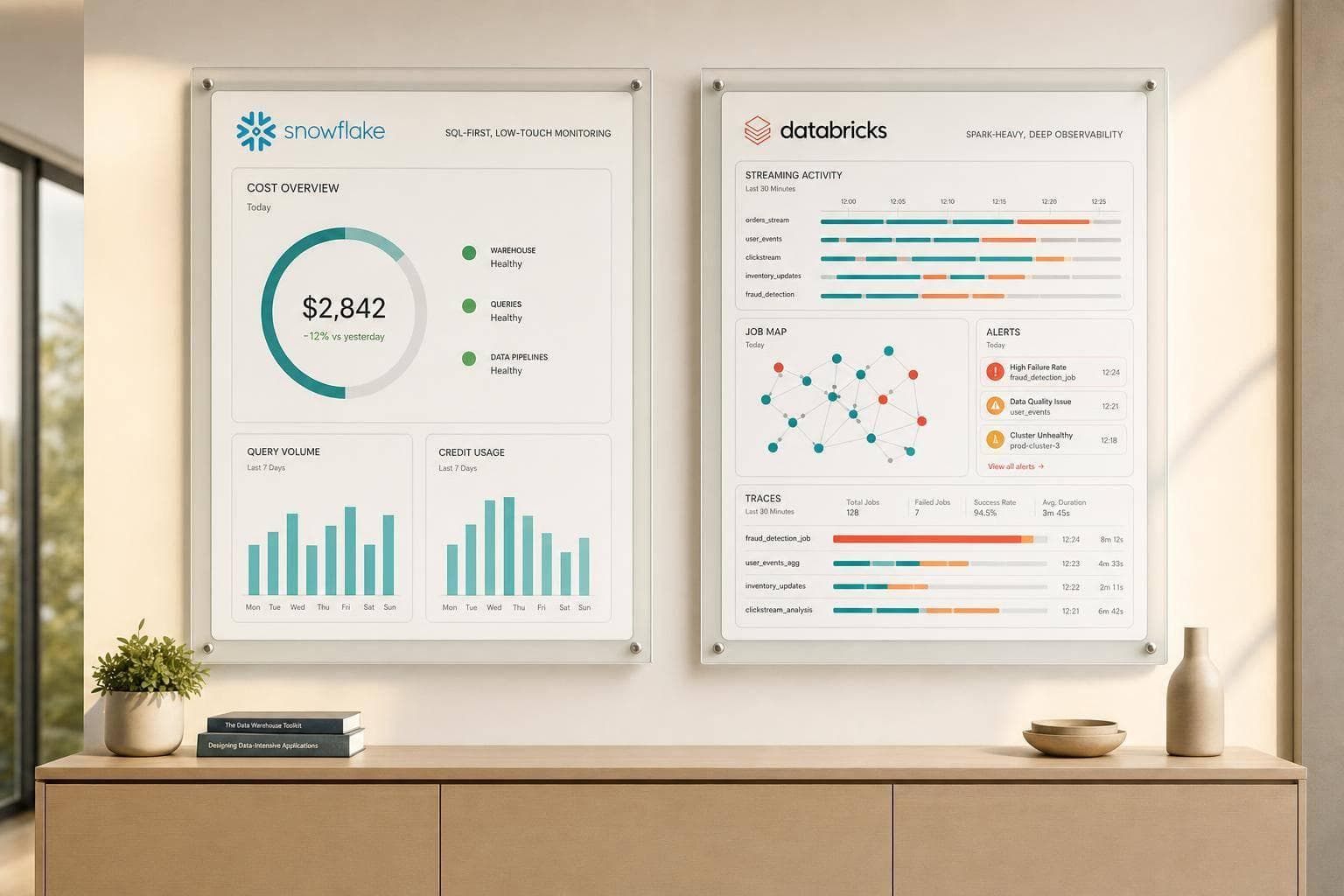
Snowflake vs. Databricks: Monitoring Features Compared
SQL-first platforms favor low-touch monitoring and credit controls, while Spark-heavy stacks demand deeper job and streaming observability.

Ultimate Guide to Data Storytelling with Dashboards
Turn dashboards into decision tools: start with one business question, design for one audience, show the insight and next steps.
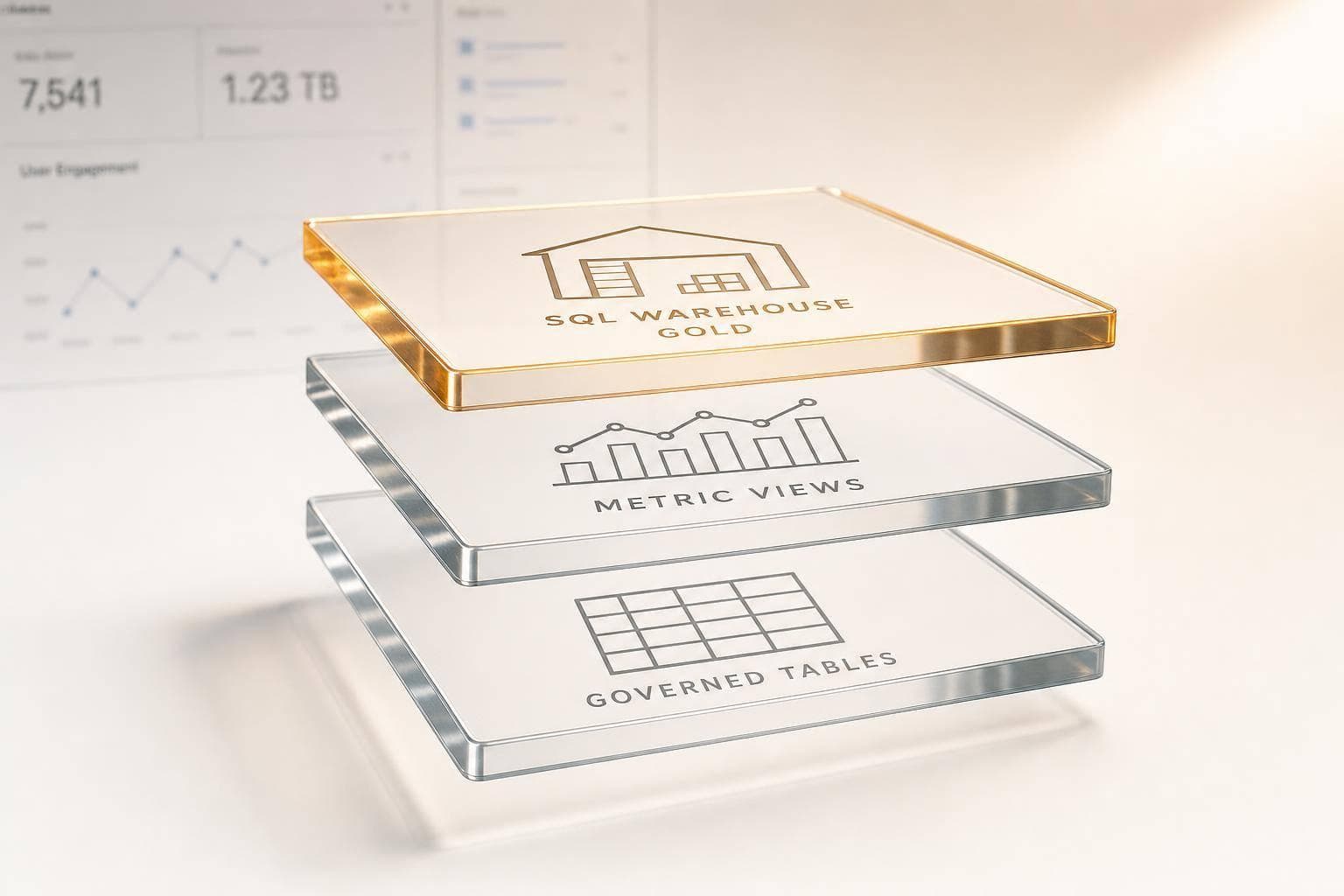
Scaling Self-Service Analytics with Databricks
Standardize Gold tables, Unity Catalog metric views, and SQL Warehouses to deliver governed, consistent self-service analytics and BI access.

Case Study: Caching with Databricks for Faster Analytics
Cut scans from 2.3TB to 8GB and reduce compute costs 73% using Disk Cache, Spark cache, SQL result cache and improved file layout.