Cost Optimization
31 articles tagged with "Cost Optimization"

Databricks ETL Optimization for Petabyte Data
Guide to tuning Databricks for petabyte ETL: cluster sizing, Delta Lake layout, Auto Loader, AQE, and predictive optimization.

Case Study: Improving Dashboard Speed with Snowflake
Diagnose and fix Snowflake dashboard slowness with caching, warehouse tuning, clustering, materialized views and search optimization.

Snowflake Bottlenecks: Troubleshooting Tips
Query design, not warehouse size, is often the real reason Snowflake slows; profile queries, reduce I/O, optimize loads, and right-size resources.

Why dbt SQL Anti-Patterns Hurt Performance
Fix common dbt SQL anti-patterns—huge CTEs, missing staging, ephemeral overuse, and bad incremental filters—to cut costs and speed runs.

Ultimate Guide to Data Engineer Salary Negotiations
Neglecting salary negotiation can cost data engineers six figures—use market data, equity, and competing offers to secure fair pay.

5 Steps to Automate Data Profiling in Snowflake
Automate Snowflake data profiling with DMFs, tasks, streams and Snowsight; define metrics, store results, and monitor anomalies and costs.

Hive Query Optimization Questions Explained
Practical Hive optimization: partitioning, bucketing, compression, Tez, vectorized execution and CBO to speed queries and cut storage and compute costs.

dbt Core vs dbt Cloud: Key Differences
dbt Cloud reduces ops overhead while dbt Core gives full control—compare hosting, scheduling, security, onboarding, and real costs.

Databricks vs. Airflow for Event-Driven Workflows
Compare Databricks and Airflow for event-driven workflows—native triggers, Spark scaling, integration trade-offs, and cost differences.

Horizontal vs. Vertical Scalability in Analytics
Compare horizontal (scale-out) and vertical (scale-up) analytics strategies — benefits, costs, latency, fault tolerance, hybrid patterns, and when to switch.

Green Data Pipelines vs. Traditional Pipelines
Compare green and traditional data pipelines: energy use, cost savings, scalability, and techniques like lazy evaluation, sparse models, and carbon-aware scheduling.
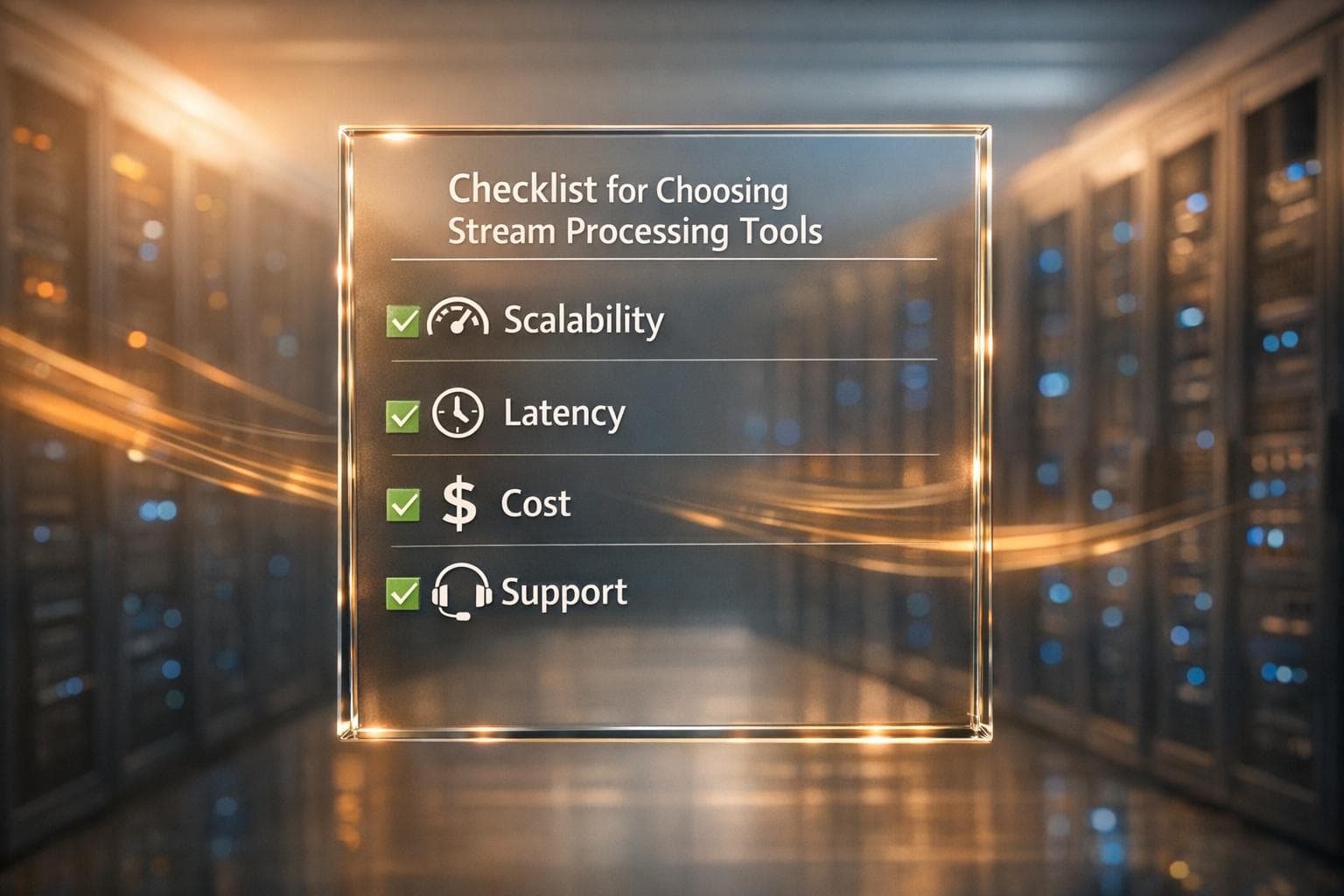
Checklist for Choosing Stream Processing Tools
A practical checklist for selecting stream processing tools based on scalability, latency, cost, and support.